
Tech
Can Sea Water Desalination Save The World?

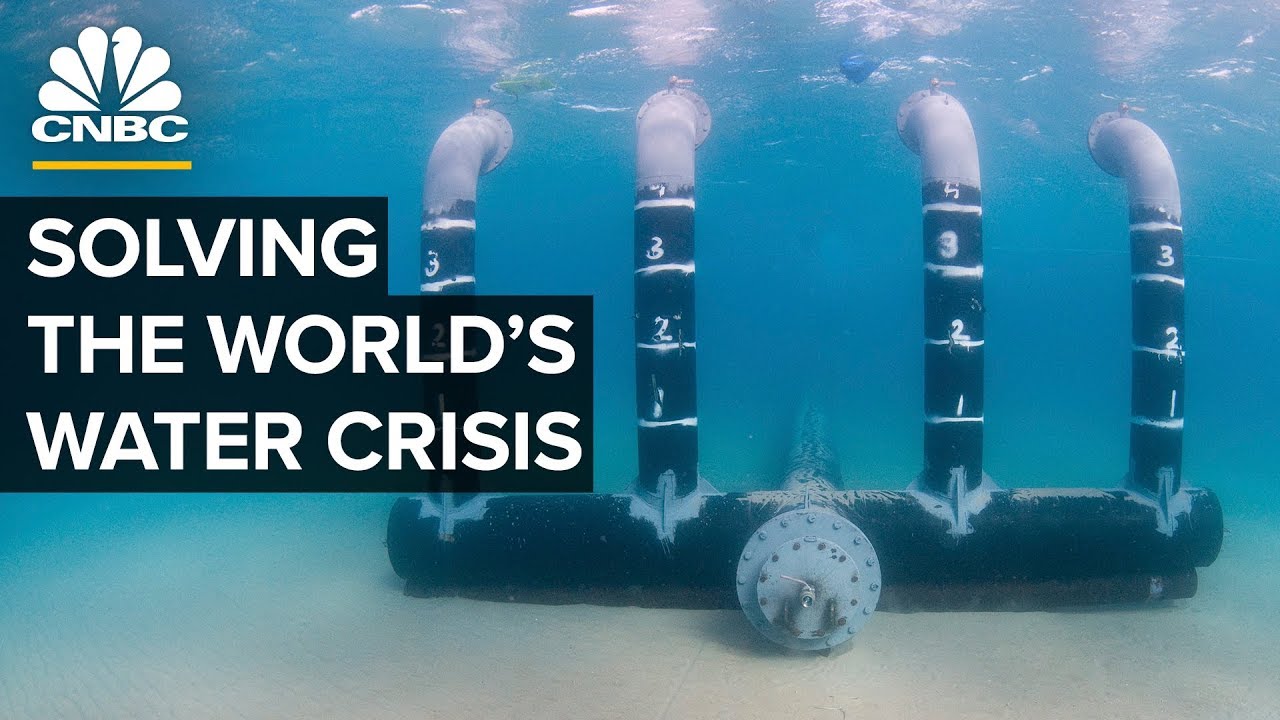
Today, one out of three people don’t have access to safe drinking water. And that’s the result of many things, but one of them is that 96.5% of that water is found in our oceans. It’s saturated with salt, and undrinkable. Most of the freshwater is locked away in glaciers or deep underground. Less than one percent of it is available to us. So why can’t we just take all that seawater, filter out the salt, and have a nearly unlimited supply of clean, drinkable water?
» Subscribe to CNBC: https://cnb.cx/SubscribeCNBC
» Subscribe to CNBC TV: https://cnb.cx/SubscribeCNBCtelevision
» Subscribe to CNBC Classic: https://cnb.cx/SubscribeCNBCclassic
About CNBC: From ‘Wall Street’ to ‘Main Street’ to award winning original documentaries and Reality TV series, CNBC has you covered. Experience special sneak peeks of your favorite shows, exclusive video and more.
Connect with CNBC News Online
Get the latest news: https://www.cnbc.com/
Follow CNBC on LinkedIn: https://cnb.cx/LinkedInCNBC
Follow CNBC News on Facebook: https://cnb.cx/LikeCNBC
Follow CNBC News on Twitter: https://cnb.cx/FollowCNBC
Follow CNBC News on Instagram: https://cnb.cx/InstagramCNBC
#CNBC
Can Sea Water Desalination Save The World?
source
Warner Music Group, the third-largest music label by market share, is tapping into the South Asian music movement with its latest venture.
CNBC’s Laya Neelakandan explains.
source
Micron’s hometown of Boise, Idaho has a growing crop of newly minted millionaires.
The AI-driven memory boom is showing up in the form of job growth, new construction projects, a bustling dining scene and an influx in new residents.
CNBC’s Katie Tarasov explains. Find the full report in related video.
source
Half of single Americans say they are going on fewer dates or choosing less expensive activities because of rising costs, according to BMO’s 2026 survey.
But, the cost of dating itself is only part of the story. For millions of users, finding a date means paying for the apps.
Watch the full story in related video.
source
Billions of dollars have been raised for this year’s midterms elections, with a significant portion coming from big name tech billionaires in the cryptocurrency, artificial intelligence and online gambling sectors. Megadonors’ contributions are overwhelmingly behind Republicans in the 2026 midterm election, with 14 of the 20 largest donor groups exclusively or nearly exclusively backing GOP candidates or outside groups. CNBC’s Luke Fountain reports.
Chapters:
00:00 – 00:56 Introduction
00:57 – 03:37 Chapter 1 – Republican-aligned donors
03:38 – 05:07 Chapter 2 – Democrat-aligned donors
Reporter: Luke Fountain
Produced and Edited by: Romy Tarantino
Animation: Jason Reginato, Emily Park
Additional Camera: Macklin Fishman, Andrew Evers
Supervising Producer: Shawn Baldwin
Additional Footage: Getty Images
» Subscribe to CNBC: https://cnb.cx/SubscribeCNBC
» Subscribe to CNBC TV: https://cnb.cx/SubscribeCNBCtelevision
About CNBC: From ‘Wall Street’ to ‘Main Street’ to award winning original documentaries and Reality TV series, CNBC has you covered. Experience special sneak peeks of your favorite shows, exclusive video and more.
Want to get ahead at work? Then you need to learn how to make effective small talk. In CNBC’s new online course, How To Talk To People At Work, expert instructors teach you how to use everyday conversation to gain visibility, build meaningful relationships and advance your career. Sign up now: https://cnb.cx/4sGlSkh
Connect with CNBC News Online
Get the latest news: https://www.cnbc.com/
Follow CNBC on LinkedIn: https://cnb.cx/LinkedInCNBC
Follow CNBC News on Instagram: https://cnb.cx/InstagramCNBC
Follow CNBC News on Facebook: https://cnb.cx/LikeCNBC
Follow CNBC on Threads: https://cnb.cx/threads
Follow CNBC News on X: https://cnb.cx/FollowCNBC
Follow CNBC on WhatsApp: https://cnb.cx/WhatsAppCNBC
#CNBC
The Megadonors Funding The 2026 Midterms
source
Auto repair prices have risen far faster than overall inflation. Mechanics say one key reason is the new software, parts, and safety technology. Shops are spending more on software access and safety calibration equipment. While the number of auto repair shops has grown, some who work in the business say it is getting harder to keep up, especially for smaller ones.
Chapters:
0:00 Introduction
02:09 Chapter 1: Complicated and expensive
04:02 Chapter 2: Access to vehicle data
Produced by: Robert Ferris
Edited and shot by: Darren Geeter, Natalie Rice
Additional Camera: Ryan Baker
Post production support: Erin Black
Animation: Jason Reginato, Emily Park
Senior managing producer: Tala Hadavi
Addition footage: Getty Images
» Subscribe to CNBC: https://cnb.cx/SubscribeCNBC
» Subscribe to CNBC TV: https://cnb.cx/SubscribeCNBCtelevision
About CNBC: From ‘Wall Street’ to ‘Main Street’ to award winning original documentaries and Reality TV series, CNBC has you covered. Experience special sneak peeks of your favorite shows, exclusive video and more.
Want to get ahead at work? Then you need to learn how to make effective small talk. In CNBC’s new online course, How To Talk To People At Work, expert instructors teach you how to use everyday conversation to gain visibility, build meaningful relationships and advance your career. Sign up now: https://cnb.cx/4sGlSkh
Connect with CNBC News Online
Get the latest news: https://www.cnbc.com/
Follow CNBC on LinkedIn: https://cnb.cx/LinkedInCNBC
Follow CNBC News on Instagram: https://cnb.cx/InstagramCNBC
Follow CNBC News on Facebook: https://cnb.cx/LikeCNBC
Follow CNBC on Threads: https://cnb.cx/threads
Follow CNBC News on X: https://cnb.cx/FollowCNBC
Follow CNBC on WhatsApp: https://cnb.cx/WhatsAppCNBC
#CNBC
Why It’s So Expensive To Run An Auto Repair Shop
source
-
Other3 years ago
Economic crisis Predictions|Bloomberg Surveillance 11/08/202…
-
Other3 years ago
Suppers Around The World – Tasty Recipes Please recognize th…
-
Food3 years ago
Kardea Brown’s Cheesy Hash Brown Casserole | Delicious Miss Brown | Food Network
-
Politics3 years ago
Russia hawks to Putin apologists: GOP stonewalls Ukraine aid, Tucker Carlson’s trip to Moscow
-
Other3 years ago
Giada De Laurentiis Makes Pan-Fried Zucchini w/ Anchovy Vina…
-
News3 years ago
White House warns of Russia invasion in Ukraine before end of Olympics
-
Other3 years ago
Just how beginner Vivek Ramaswamy is gaining some Trump foll…
-
Sports3 years ago
Top 10 Saves from Week 13 of the 2021-22 NHL Season
-
Other3 years ago
MaxMara Spring/Summer 2013 FULL SHOW|Milan Fashion Week MFW|…
-
Politics3 years ago
George Conway: ‘Lying, intimidating, bullying. That’s Trump at his worst, and that’s Trump always’
@csvishi
January 16, 2024 at 10:57 am
Just an fyi … thermal desalination destroys the sea ecosystems . The delicate coral ecosystem of Lakshadweep which is being touted for tourism might not even survive if desalination plants are installed … for more information watch this
https://youtu.be/bfr82RB72U8?si=a1VJVXZV7PEwL0O9
@sailingavocet
January 16, 2024 at 10:57 am
Interesting video. We have a desalination unit on our sailboat, and love it. You may be interested in this: https://youtu.be/oxFHDGvJXQQ
@jonathonmoores9137
January 16, 2024 at 10:57 am
They need to do this in California instead of desalination from our toilets 💩
@terryakuna66
January 16, 2024 at 10:57 am
Set up salt pool next to the desalination plant, now you're not dumping brine into the ocean and you have a salt supply as well.
@rodg4673
January 16, 2024 at 10:57 am
Any benefits of the brine to water plantations? Or would not work?
@suissdagout5153
January 16, 2024 at 10:57 am
Poeples locked my FB
@scipioafricanus2
January 16, 2024 at 10:57 am
incalculable greater amount of fresh water is taken from the oceans through evaporation than any million desalinization plants could do. the salt remains in the oceans, but the fresh water eventually finds its way back unless locked in glaciers which mostly melt during the summer anyway.
@scipioafricanus2
January 16, 2024 at 10:57 am
the brine can safely be returned to the ocean as untold tons of fresh water flow into the oceans every single day to dissolve the brine. the desalinated water evaporates just like salt water eventually and comes back to the earth as rain.
@scipioafricanus2
January 16, 2024 at 10:57 am
there are no adverse environmental impacts from desalinization and nuclear power can easily provide more than enough cheap energy to power it.
@scipioafricanus2
January 16, 2024 at 10:57 am
yes it can very easily if powered by the cheap energy from nuclear fission.
@andersjrgensen581
January 16, 2024 at 10:57 am
desalination cancel out the melting off grenland freshvater and antactic melting freshvater
@nomas9893
January 16, 2024 at 10:57 am
still bs
corporations are not ready to change the chemistry of the oceans for profit
@Lionoftruth7
January 16, 2024 at 10:57 am
Why not make reservoirs and pump water from natural rivers and collect rainwater 🤷🏻♂️ , governments can also make man made lakes where natural rains will help fill them and pump water into them from rivers that flow into ocean 🌊 . Ppl in Rajasthan have been collecting rainwater for hundreds of years and survinbg in a desert 😊.
@EricPham-gr8pg
January 16, 2024 at 10:57 am
People had no honor in treating the earth. Water is a living life but much bigger and more powerful but in big city most people wates it taking bath tube or long shower and not saving rain water ect these are serious threat because if the entire world consume water like the west a serious problem will happened like flesh eating virus or sould degrading morals because through the body or washing body with water in shower influence water with personal karma and mixed in large grounp may even scary because human had sacred relationships with the holy ghost
@TPS070
January 16, 2024 at 10:57 am
Run out of water and now the seas and oceans are in danger….damn thirsty humans
@TorontoMarketingGuy
January 16, 2024 at 10:57 am
ppl just need to stop reproducing for 10 years and we'll be ok
@guzzlegoober1287
January 16, 2024 at 10:57 am
neat
amoung us
@nanphet8527
January 16, 2024 at 10:57 am
bottom line its just about money!!! gov and business investor will always do it the cheaper way with rivers until all the rivers are nomore water in them!!!
@XxnosmanXx
January 16, 2024 at 10:57 am
Desalination is the future, it’s been around for a long time. Saudi Arabia has the largest desalination plant in the world. Produces over a million gallons of drinking water per day. We’ll find a way to reduce the carbon footprint it produces to convert over time. Engineers are working on better systems right now.
@dxmxrxsbxxckthxwxxdxlf3931
January 16, 2024 at 10:57 am
I wonder if brine can be made into table salt for consumption
@daveg5857
January 16, 2024 at 10:57 am
7:11 It's wreak havoc, not wreck havoc. If havoc exists, you just might want to wreck it.
@amulyapydipogu2544
January 16, 2024 at 10:57 am
In small scale or for each house how we can do
@Bruc3McClan3
January 16, 2024 at 10:57 am
Desalination Southwest and Power Generation
Arizona has the superpowers of: Heat, Elevation, and Solar Power Generating Potential Capabilities.
By pumping water from San Diego through a network of pipelines, using solar power, we could resolve our water shortage and redistribute throughout the southwest – to New Mexico, Nevada, SoCal, and Arizona(of course), by using the natural landscape of Ft. Thomas, AZ and an evaporative processing system, to produce desalinated water. Additional reservoirs could produce hydropower. We could utilize the natural flowing Gila River to help filter the water as well, by passing through sequences of filtering membranes we would have to maintain in towns along the river-ways.
Of course, this mega project’s initial investment would cost billions, but would turn our deserts into an oasis while providing thousands of jobs and solving our impending water shortage.
This could resupply our aquifers, help the Native American tribes who rely on the rivers, lower the cost of electricity on the locals, lower the costs affecting farmers, prevent drought, help our native wildlife, provide more resources for wildfire fire-fighting, and dramatically improve our economy far past our $460B GDP: making AZ one of the top 10 GDP states in the US.
@evanrutherfordlazyahole9079
January 16, 2024 at 10:57 am
https://m.youtube.com/watch?v=Upsm3E2NUI8
@ischiagiorgio
January 16, 2024 at 10:57 am
YES! Dumb question.
@JZ-gr1tz
January 16, 2024 at 10:57 am
Remember. The words of Bill Cinton
Let's live things how it is [ don't forget. Compensation]
Better not change. As it Is did any of u knew. We get all of us in planet
50% or more. Oxygen from Ocean
Live thigns way they are
@tupperlake100
January 16, 2024 at 10:57 am
Hong Kong has no natural fresh water. It was determined that desalination costs would be an unreasonably expensive. I think the proposed alternative would have a horrenous environmental impact. Overpopulation is placing more demands on this planet. Not enough water is not the main problem. Populations grow but the size of the planet does not become greater. More people are starving and dying of diseases than water availability.
The planets environment become less and less friendly. Draughts, floods, earthquakes, fires, etc..
@royhamill5719
January 16, 2024 at 10:57 am
It is known that brine has many needed minerals that could be removed. If you don't know what to do with the Brine, pump it to Death Valley and let the sun start the process of separating out salt and rare minerals.
@anapham4724
January 16, 2024 at 10:57 am
HUMANSSTUPIDITY..
IMAGINE HOW HUMANS REACHING TO THE MOON AND YET PEOPLE STILL FEEL LAZY TO FINALLY TURN SEA WATER IN TO DRINKING WATER IN TO WHOLE WORLD
@aadigupta4501
January 16, 2024 at 10:57 am
Title: Harnessing Water intake in desalination plants from mesopelagic (below epipelagic) region
I'd like to propose an idea that has possible potential to help the desalination industry.
Imagine a desalination plant that deploys an intake pipe from mesopelagic region to the surface, and then pumps its feedwater from the opening of this large pipe on the sea surface. This pipe will continue to fill due to the capillary action and we do not need energy-intensive pumps to bring that "cleaner" water to the surface.
There are several compelling reasons to explore this approach:
1. Reduced Biofouling: Drawing water from greater depths could significantly reduce the risk of biofouling, a persistent challenge in desalination. By avoiding the epipelagic region where microorganisms thrive, we can minimize fouling and maintenance costs.
2. Potential for Lower Suspended Particle Concentration: mesopelagic waters typically have lower concentrations of suspended particles compared to surface waters. This could lead to system longevity and reduced costs.
3. Environmental Impact: Deploying a possible parallel line for brine disposal at the same depth can mitigate the environmental impact of brine discharge. This approach allows for more efficient dilution and dispersion, reducing harm to marine ecosystems.
4. Significant Savings: Energy savings, reduced maintenance costs, and improved desalination efficiency could translate into significant economic benefits for the industry.
I invite you to share your thoughts, ideas, and expertise on this proposal.
#WaterTreatment #Desalination #Innovation #Sustainability
@davidvilleneuve8292
January 16, 2024 at 10:57 am
could use it in the north atlantic,recently?
@komolkovathana8568
January 16, 2024 at 10:57 am
07:53 ratio of freshwater per higher saline -water is (1: 1.5 ) or (2 : 3), meaning every 5 (five) litres of sucked-in (RAW) SEAWATER, we will only get 2 (two) litres of Freshwater. The left-over/remaining (3 litres out of 5) is higher concentration of Brine/Salty water, to be carried-away. If talking this way, you will find " NOTHING STRANGE" in it/the process. Think of "waste" by-product, luckily the higher-salt concentrate can be diluted once they were mixed with larger amount of surrounding ocean. The worried concern is that with presumably LARGE AMOUNT OF Saline-"WASTEwater", the Dilution Process may not be FAST enough to mix-off into low percentage of (ordinary) seawater.. says 1.8 to 2.5 % of safety minerals contents. The Brine Waste, discharged, can contain upto 3.5% of salt/ minerals, which is harmful to sea creature eg, fish, crabs, coral reefs and the living-in.!?!
@livingthelifedreamingthedr6392
January 16, 2024 at 10:57 am
Just out of curiosity, the brine that is leftover from the desalination process could be deposited elsewhere to aid our beautiful planet. If for example it was deposited into the ocean where the glaciers are melting and therefore diluting the Gulf Stream, would this not aid in reversing the damage that the melting glaciers are contributing to?? It probably wouldn’t totally reverse the dilution but it sure might stop the Gulf Stream dying out in the North Atlantic 🤔🤔🤔🤔🤔
@Oliveir51
January 16, 2024 at 10:57 am
Is too much energy. Thin air to water seems a solution in developpment but progressing fast
@Vernell-wv5tn
January 16, 2024 at 10:57 am
vernell hasty partnership sea water desalination save world VHM
@DaveFury
January 16, 2024 at 10:57 am
Globally 1 out of 3 people don’t have access to clean water? Not true, but this is CNBC.
@libs-Suk-Balz
January 16, 2024 at 10:57 am
California refuses to build these plants. Morons
@benarizola6609
January 16, 2024 at 10:57 am
The excuse of brine is ridiculous. If our freshwater is 6% of the world's water supply, how much water would we be taking from the HUUUUUGE ocean. The brine going back would be like a straw in an Olympic sized pool.
@papisalamander1056
January 16, 2024 at 10:57 am
THEN MOVE WHERE THE WATER IS
@arielcamacho4735
January 16, 2024 at 10:57 am
Alot of solar pannels should help for energy
@travelnewsbeneficialknowle3020
January 16, 2024 at 10:57 am
🙏🙏🙏👏👏👏👍👍
@user-of6ze5lb2b
January 16, 2024 at 10:57 am
I am also reserching on this🎉
@sarvarbeknasriddinov9645
January 16, 2024 at 10:57 am
👍👍👍